Welcome To
The Cut Sheet

All Blogs
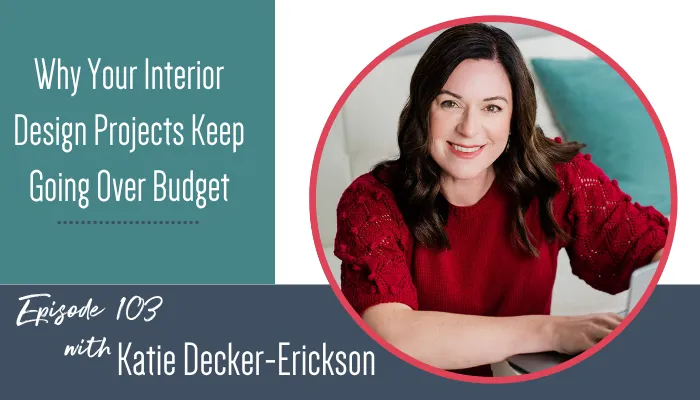
Why Your Interior Design Projects Keep Going Over Budget
If you’ve ever wrapped up a project and thought, how did we get here again?—you’re not alone.
You started with a clear design plan.
You had a budget conversation.
The client seemed aligned.
And then somewhere between the mood board and install day… everything unraveled.
The budget crept.
The revisions multiplied.
And the project that once felt exciting now feels heavy.
Most designers assume this is just part of the job.
It’s not.
The Real Reason Interior Design Projects Go Over Budget
Let me say something that might surprise you:
Interior design projects don’t go over budget because you’re bad at budgeting.
They go over budget because of how the project is structured from the very beginning.
That’s the piece most designers miss.
Because when your process doesn’t guide how decisions are made, your client defaults to what they do know—shopping, comparing, and second-guessing.
And that’s when everything starts to fall apart.
When Design Turns Into Negotiation
One of the biggest mistakes I see is presenting pricing piece by piece.
You tell the client:
The sofa is this much
The rug is this much
The lighting is this much
It feels transparent. It feels helpful.
But what it actually does is shift your client into comparison mode.
They start asking:
Is the sofa worth it?
Can I find something cheaper?
Do I really need that rug?
And once that happens, your design is no longer a cohesive vision.
It becomes a negotiation.
The “Pillow Syndrome” Problem
There’s a moment in almost every project where a client fixates on one item.
Usually the most expensive one.
“I love it… but I’d never spend that on a pillow.”
And just like that, the unraveling begins.
Because when one piece gets questioned, everything connected to it starts to shift.
Before you know it, you’re redesigning the same room for the fifth time—and your profit is disappearing with it.
Why Your Process Matters More Than Your Pricing
Here’s what most designers don’t realize:
This isn’t a pricing issue.
It’s a decision-making issue.
When clients are shown individual items, they evaluate each one independently.
But your client doesn’t experience your work that way.
They experience the finished space.
That’s why the most profitable designers don’t lead with line-item pricing.
They lead with the room.
The Shift That Changes Everything
When you shift from item-based pricing to room-based budgeting, everything changes.
Instead of asking, “Is this chair worth it?”
Your client starts asking, “What does it take to create this space?”
That’s a completely different conversation.
And it’s one that protects:
Your design integrity
Your client’s confidence
And your profitability
But that shift doesn’t happen by accident.
It comes from building a process that supports clear decisions from the very beginning.
Why Budget Conversations Feel So Hard (And Why You Need Them Anyway)
Many designers avoid getting specific about budget upfront.
It feels uncomfortable.
It feels intrusive.
It feels like you might scare the client away.
But avoiding that conversation is exactly what creates problems later.
Because without a clear investment range, you’re designing blindly.
And when the pricing finally shows up, that’s when the client panic starts.
Clarity at the beginning prevents frustration at the end.
Want to Fix This for Good?
If your projects are constantly going over budget…
If you’re stuck in endless revision cycles…
If you feel like you’re defending every design decision…
You don’t need better clients.
You need a better process.
In this episode of Success by Design, I walk you through exactly how to:
• Set budgets in a way that creates clarity and trust
• Shift from line-item pricing to room-based investment
• Structure revisions so projects don’t spiral
• Protect your time, your profit, and your sanity
🎧 Listen to the full episode to learn how to build a process that keeps your projects on track—and your business working for you.

Meet Your Coach Katie, a dynamic PODCAST host and successful entrepreneur.
Former news anchor turned leader of a multimillion-dollar design firm, Katie's passion lies in uncovering brilliance and sharing design and business secrets. Her insatiable curiosity, honed in the media spotlight, fuels enlightening conversations on her podcast, offering a platform for wisdom-seeking design enthusiasts and aspiring entrepreneurs.
tune in to the podcast
Success by Design
mastering the business of interior design
Schedule your Strategy Session With Katie
Why Your Interior Design Projects Keep Going Over Budget
If you’ve ever wrapped up a project and thought, how did we get here again?—you’re not alone.
You started with a clear design plan.
You had a budget conversation.
The client seemed aligned.
And then somewhere between the mood board and install day… everything unraveled.
The budget crept.
The revisions multiplied.
And the project that once felt exciting now feels heavy.
Most designers assume this is just part of the job.
It’s not.
The Real Reason Interior Design Projects Go Over Budget
Let me say something that might surprise you:
Interior design projects don’t go over budget because you’re bad at budgeting.
They go over budget because of how the project is structured from the very beginning.
That’s the piece most designers miss.
Because when your process doesn’t guide how decisions are made, your client defaults to what they do know—shopping, comparing, and second-guessing.
And that’s when everything starts to fall apart.
When Design Turns Into Negotiation
One of the biggest mistakes I see is presenting pricing piece by piece.
You tell the client:
The sofa is this much
The rug is this much
The lighting is this much
It feels transparent. It feels helpful.
But what it actually does is shift your client into comparison mode.
They start asking:
Is the sofa worth it?
Can I find something cheaper?
Do I really need that rug?
And once that happens, your design is no longer a cohesive vision.
It becomes a negotiation.
The “Pillow Syndrome” Problem
There’s a moment in almost every project where a client fixates on one item.
Usually the most expensive one.
“I love it… but I’d never spend that on a pillow.”
And just like that, the unraveling begins.
Because when one piece gets questioned, everything connected to it starts to shift.
Before you know it, you’re redesigning the same room for the fifth time—and your profit is disappearing with it.
Why Your Process Matters More Than Your Pricing
Here’s what most designers don’t realize:
This isn’t a pricing issue.
It’s a decision-making issue.
When clients are shown individual items, they evaluate each one independently.
But your client doesn’t experience your work that way.
They experience the finished space.
That’s why the most profitable designers don’t lead with line-item pricing.
They lead with the room.
The Shift That Changes Everything
When you shift from item-based pricing to room-based budgeting, everything changes.
Instead of asking, “Is this chair worth it?”
Your client starts asking, “What does it take to create this space?”
That’s a completely different conversation.
And it’s one that protects:
Your design integrity
Your client’s confidence
And your profitability
But that shift doesn’t happen by accident.
It comes from building a process that supports clear decisions from the very beginning.
Why Budget Conversations Feel So Hard (And Why You Need Them Anyway)
Many designers avoid getting specific about budget upfront.
It feels uncomfortable.
It feels intrusive.
It feels like you might scare the client away.
But avoiding that conversation is exactly what creates problems later.
Because without a clear investment range, you’re designing blindly.
And when the pricing finally shows up, that’s when the client panic starts.
Clarity at the beginning prevents frustration at the end.
Want to Fix This for Good?
If your projects are constantly going over budget…
If you’re stuck in endless revision cycles…
If you feel like you’re defending every design decision…
You don’t need better clients.
You need a better process.
In this episode of Success by Design, I walk you through exactly how to:
• Set budgets in a way that creates clarity and trust
• Shift from line-item pricing to room-based investment
• Structure revisions so projects don’t spiral
• Protect your time, your profit, and your sanity
🎧 Listen to the full episode to learn how to build a process that keeps your projects on track—and your business working for you.
Where TO next?
Check Out The Podcast
Whether you’re a budding designer or a savvy entrepreneur, this webcast is your go-to source for inspiration, insights, and a dash of lively conversation. Tune in and let your imagination, business and life take flight!

WATCH NOW:


work with katie 1:1
Learn More About Success by design Coaching
Wenatchee, Washington 98801



Explore
successbydesign.coach- All Rights Reserved - Terms & Conditions - Cookie Policy